


Has your building undergone a flat roof installation?
Flat roofs require maintenance to keep them in tip-top condition. Without it, you risk leaks.
Roof leaks are expensive to fix, extremely disruptive, and can lead to serious structural issues if left unchecked. Thankfully, there’s something that can help you avoid major damage.
Enter electronic leak detection.
A modern, efficient method of locating leaks, electronic leak detection pinpoints weaknesses and holes in your flat roof before they become an issue.
What Is Electronic Leak Detection?
Professional, high-quality flat roof installation means your roofing system should last many years, protected well against moisture and sunlight.
However, lack of essential maintenance, age, and poor flat roof installation can cause waterproof coverings to fail, putting you at risk of a leak.
Electronic leak detection is a method of pinpointing the location of a leak in a flat roof. It can pick up defects as small as 1 micron (a pinprick), using a low-voltage electrical current to find the source of moisture; this works because the current flows towards the leak or trapped water.
Alternatives To Electronic Leak Detection
ELD isn’t the only way to find a tiny hole in a flat roof. Here are your other options…
Visual Inspection
The most basic method. A thorough examination of the roof’s surface and building interior is assessed for signs of damage, stains, moisture or ponding water. Ponding water is the term for standing water accumulating on a flat roof.
Flood Test
This one does what it says on the tin. To conduct a flood test, a flat roof is flooded with a controlled amount of water to see if any of it leaks through the roofing membrane.
Infrared Thermography
Infrared thermography is a powerful leak detection tool. This method involves using an infrared camera to detect temperature differences in a flat roof. Wet insulation, for example, will show up differently on the thermal images than dry areas, helping professionals to find a leak.
Moisture Meter
Another option is to use a handheld moisture-measuring device called a moisture meter. Moisture meters check moisture levels within the roofing material or insulation.
The Most Common Causes Of Flat Roof Leaks
Leaks can happen. Even to professional flat roof installations. Here are six of the most common reasons we come across.
Damaged Roofing Materials
Damage from impact during maintenance or sharp objects falling onto the roof can cause rips, punctures or tears in the waterproof membrane.
Loose Collars Or Flashing
Collars and flashing seal the waterproof membrane against edges and protrusions, such as chimneys. When it becomes loose or corroded, this causes gaps where water can get in, leading to leaks.
Installation Issues
Improper flat roof installation can quickly lead to leaks for a variety of reasons. Low-quality materials may have been used, flashings might not have been fitted correctly, the surface may not have been prepared properly, the slope or fall may be inadequate, and damage to the waterproofing may have occured during the installationprocess.
Poor Drainage And Pooling
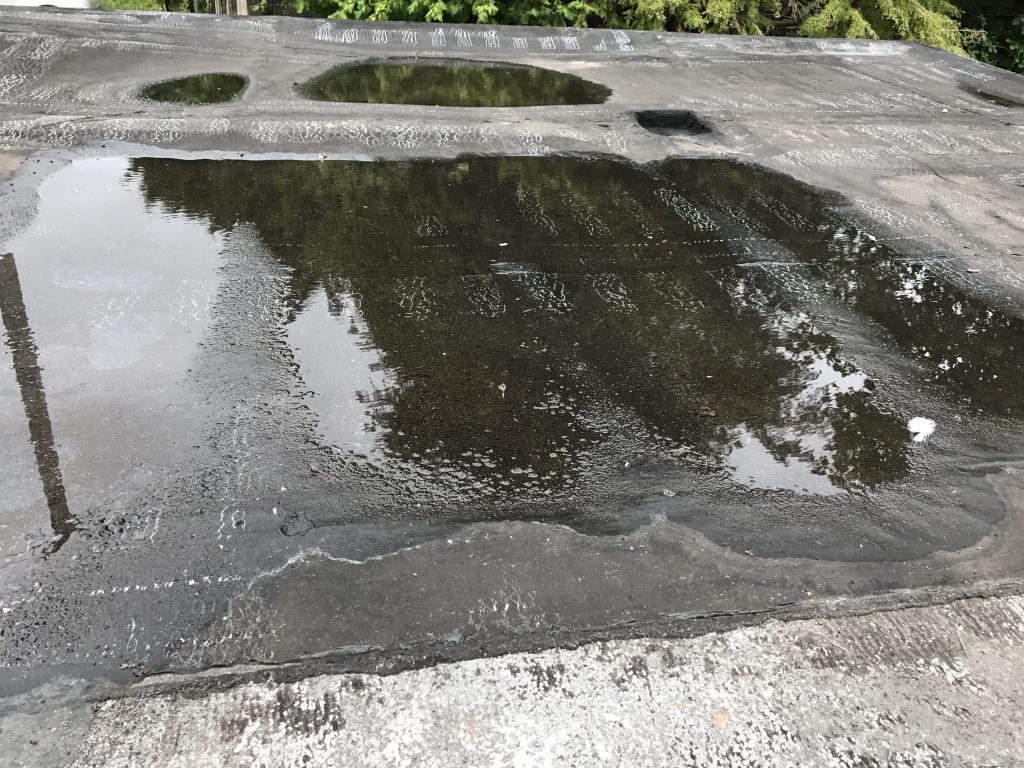
Flat roofs need to be slightly sloped so that water can run off rather than pool. An insufficient gradient, as well as clogged drains, can cause water to pool and eventually work its way through the waterproofing.
Degraded Materials
Professional flat roof installation should ensure your roof lasts a long time. However, over time, the roofing materials will age and lose integrity. Degraded materials are less likely to stand up against harsh weather conditions, and this can cause leaks.
The Benefits Of Electronic Leak Detection
Electronic leak detection is often the most thorough method of finding a leak in a flat roofing system, and here’s why…
Gentle Testing
Electronic leak detection is non-invasive, meaning the roof will not be cut into or taken apart during the testing process.
Accurate
ELD locates a leak quickly and precisely so that targeted repairs can be carried out in the problem area. This method is non-disruptive and saves homeowners and businesses time and money.
Very Versatile
From single-ply membranes to bitumen roofing, electronic leak detection can be used on various types of flat roofs, making it the perfect solution for a wide range of buildings.
Electronic Leak Testing with Proactive Flat Roofing
It shouldn’t come as a surprise that we love flat roofs here at PFR. With expertise and professionalism to boot, our flat roof installation is the gold standard – but unfortunately, we’ve come across plenty of roofs that aren’t up to scratch.
From improper installation to weather damage, leaks are a problem. And, left unchecked, they can quickly escalate into bigger problems that require expensive exploratory work and even costlier repairs.
Thankfully, PFR specialises in both commercial and residential leak detection. We are committed to minimal disruption, crystal-clear communication and accurate results. Fast.
Have You Noticed A Bubble Or Saggy Patch?
Your flat roof may well have sprung a leak.
Using electronic leak detection identifies the problem area quickly and accurately so that it can be repaired before it escalates into a bigger, more costly problem.
Visit our website to book a roof survey, including leak detection, for complete peace of mind.