Adding A Green Roof to Your Property Has At Least 10 Benefits For You & The Environment
To be honest, it’s a pretty generic term that covers a multitude of options available to you. To keep it as simple as possible there are, according to the Green Roof Organisation (GRO), basically three main types of “green” roof (with several variations) available to you. These are:
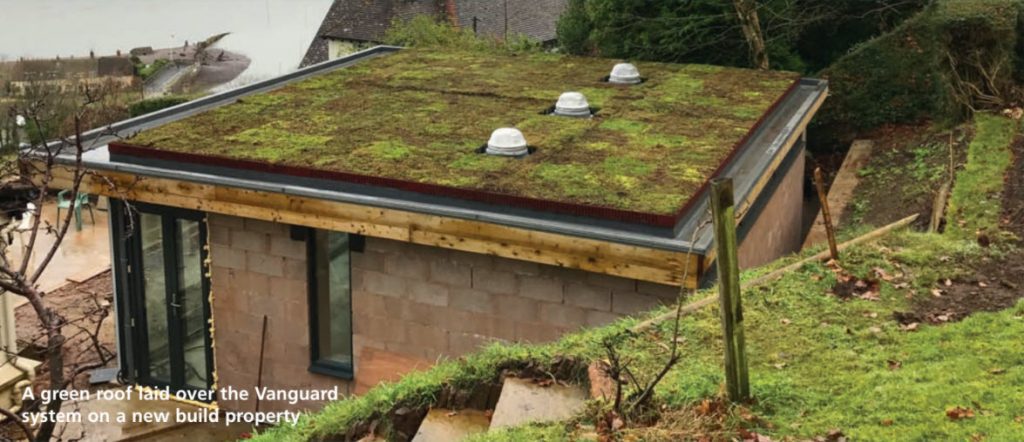
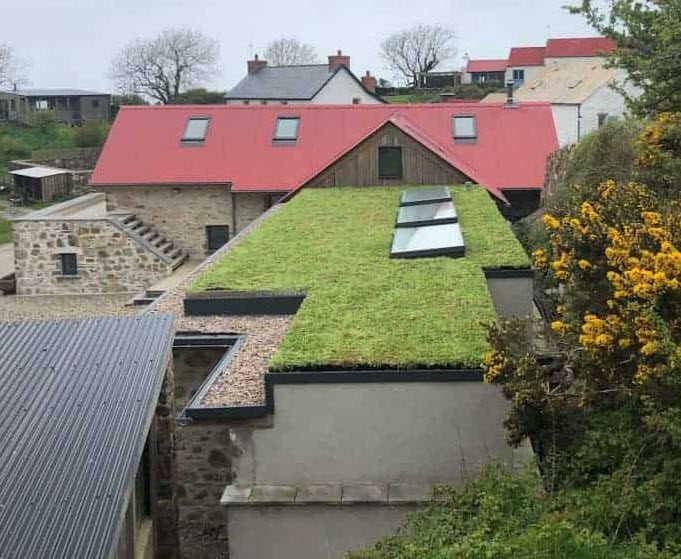
Extensive green roofs are generally not designed to be walked on and are planted with “sedum” plants. These are hardy plants which can live in all types of conditions of severe cold and heat, they are often found high up in mountains so are well used to adverse weather conditions.
This type of green roof is also the most popular option out of the three listed, it is very low maintenance and once established takes very little after-care to keep it thriving.
It is a very versatile option and can include wildflower options if you want to attract bees and other wildlife.
Sedum can survive on shallow substrate depths, low nutrient levels and has little or no irrigation requirement (when correctly designed) and installed. Irrigation is generally only required in the initial establishment phase, and then very rarely afterwards.
One of the main benefits of this type of green roof option is that it can be installed already well established, so you wont need to wait to experience the full visual and environmental impact.
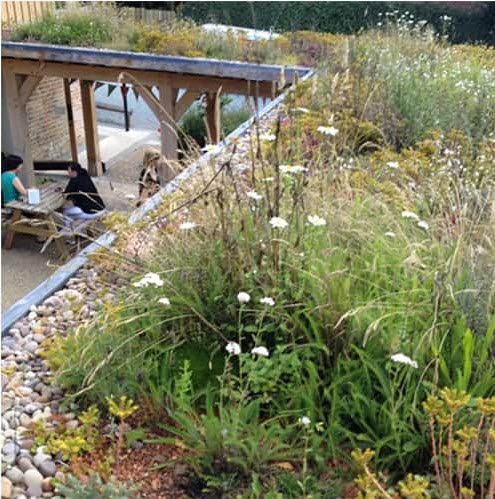
Bio Diverse green roofs include several options for this type of green roof, such as “brown roofs” (which are plug-planted after being installed) or pre-grown and cultivated off-site prior to installation.
The most important differentiation between extensive roofs and biodiverse green roofs is that the latter are planted with the types of plants that are indigenous to the area that the roof is fitted to.
This type of roof is becoming very popular in “urban” areas where the planners want to ensure that where possible the new buildings can recreate what nature had intended before the building went up.
We are seeing many benefits in big cities now, where this type of green roof is attracting back the wildlife that was there before which has to be a big positive for us and nature alike.
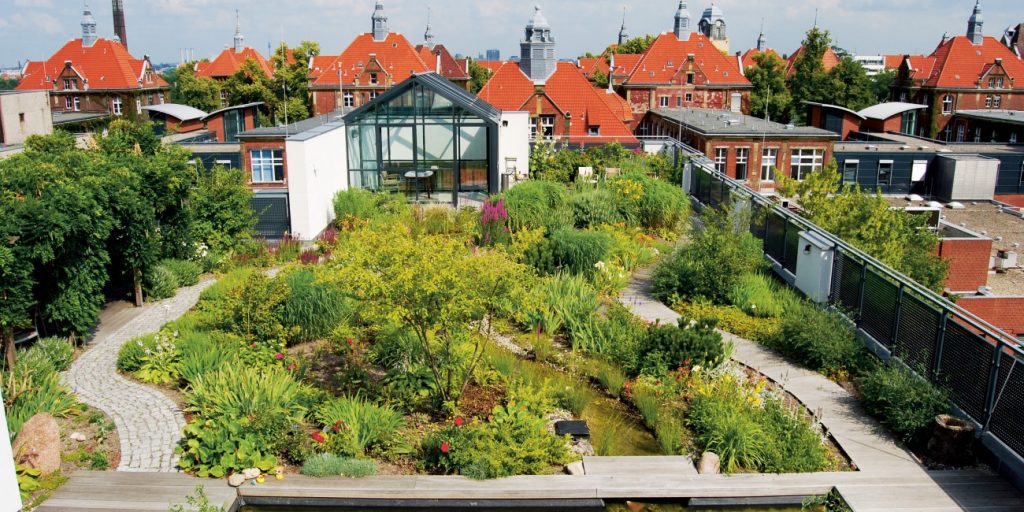
Intensive green roofs are generally where the area is to be used as a recreational space and will often include very similar features to traditional parks, gardens and open spaces such as shrubs, trees, paving, lawns and even water features in some cases!
Intensive green roofs (also termed Roof Gardens) are principally designed to create recreational and amenity spaces for people to enjoy.
Our Commercial & Industrial Roof Coating solutions are designed to protect and extend the life of your roof while enhancing performance. As specialists in Commercial Flat Roofing, we work with a wide range of systems, including Vanguard Roof Shield, to deliver durable, long-lasting results. These roof spaces are generally accessible and can include features similar to traditional gardens, such as lawns, trees, shrubs and hard-landscaped areas.
Intensive green roof systems involve using greater substrate depths (usually above 200mm) and often create a larger weight loading on the roof. Intensive green roof systems require a higher level of maintenance, including regular irrigation so are much harder to maintain.
An intermediate green roof type that can include characteristics of both extensive and intensive roofs. Typically requiring a substrate depth of 100 – 200mm, a wider range of plants can be included compared to extensive green roofs, including shrubs and woody plants. Irrigation and maintenance requirements are dependent upon the plant species installed.
There are basically two options when it comes to installing a green roof depending on the type of green roof you want (Extensive, Bio Diverse or Intensive). These are:
As a general rule the pre-grown tray option currently only exists for the Extensive sedum type of green roof option with the built up system type being more widely used for Bio Diverse and Intensive types of green roofs.
As Flat Roof Specialists, we use proven methods to ensure every installation performs as it should, including Electronic Leak Testing to confirm the roof is fully watertight. Pre-grown trays tend to be a more viable option for smaller projects, as they are simpler to store before installation and quicker and easier to install.
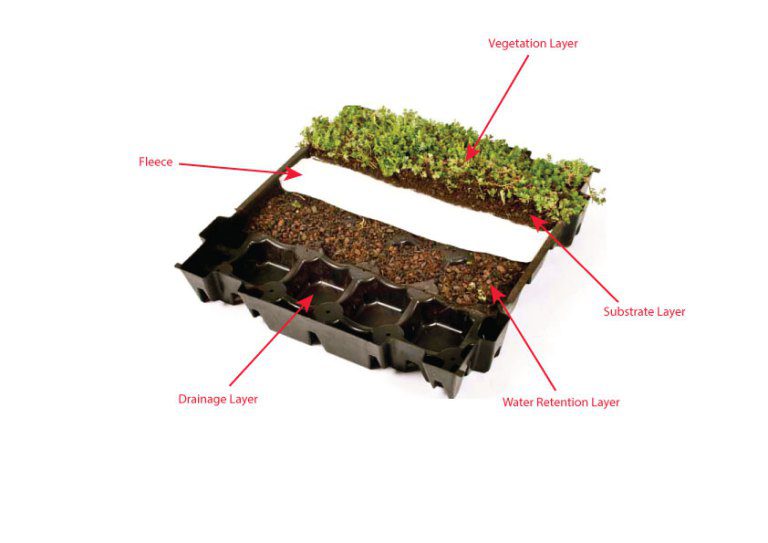
Suitable For: Smaller projects requiring ‘Instant greening’
Specification Drivers: An ecological protection layer for:
• Air & water quality
• Lower carbon emissions
• Storm water attenuation
• Wildlife habitat
• Extended membrane life
Planting: Colourful carpet of planting:
• Hardy Succulents
• Hardy Succulents & Herbs
• Hardy Succulents & Grasses &
Herbs
Pre-grown mat as part of self contained complete modules.
Build-up Height: 80-90mm
Weight: Approx 48 kg/m2
Maintenance: Minimal
Irrigation: No, unless specified
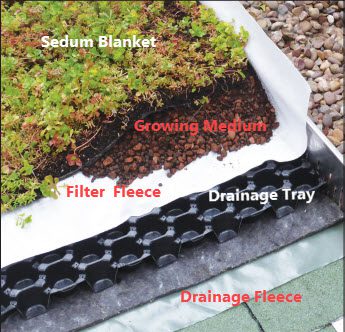
Suitable For: Larger projects (more cost effective)
Specification Drivers: An ecological protection layer for:
• Air & Water quality
• Lower carbon emissions
• Storm water attenuation
• Wildlife habitat
• Extended membrane life
Planting: Colourful carpet of planting:
• Hardy Succulents
• Hardy Succulents & Herbs
• Hardy Succulents & Grasses &
Herbs
Pre-grown mat as part of self contained complete modules.
Build-up Height: 70 – 120 mm
Weight: Approx 80 – 125 kg/m2
Maintenance: Minimal
Irrigation: No, unless specified
Sun is the most savage enemy of the roofs in hot climates. A layer of greenery protects the roofing against this UV radiation, rainfall, snow and debris. Because your green roof is used to dealing with the climate naturally, your green roof will last two to three times longer than traditional roof covering. Keep that in mind when you consider the cost for the whole life-cycle of the roof.
An extra layer of soil and plants helps to regulate the heat. In the summer it absorbs excess heat and in winter it stops it from escaping. This lowers the energy demand which reflects positively on your energy bill.
At the same time, less energy needed to heat or cool the building reduces overall environmental footprint over the lifespan of the building, and keeps your energy bills as low as they can be which is good for your bank balance and our environment!
Both impact noises such as rain and environmental noises are absorbed by the soil. A 10 cm of green roof lowers the sound impact by up to 5 dB. So you get an improved and enhanced living experience inside your home.
We have naturally determined affinity for greenery. Having a green roof provides nicer view for residents above and improves character of the whole neighbourhood.
Green roofs can be designed as walk-able spaces that can extend your garden and provide support for planting herbs and vegetables. This is especially relevant if your home is in a town or city where space is at a premium.
The vegetation filters some of the pollution and particles present in the air. Leaves can absorb heavy metals such as cadmium, copper and lead. Air pollution above gardens and parks is 80% lower than over the city.
At the same time leaves catch the bigger dust particles which are than incorporated into soil substrate or washed down.
In the long run this helps with preventing respiratory problems and thus lowers operating cost of the healthcare system.
Half of the rainwater that falls onto green roofs is filtered and absorbed by the vegetation, lowering the pressure on the sewage system. This is especially helpful during the peak loads and allows the municipal sewage to be designed to be smaller and therefore less expensive to build and maintain.
Water from green roofs is also cleaner than water from a conventional roof, reducing the maintenance cost for sewage. Again a great win for our environment.
On the urban scale, green roofs help to mitigate the heat island effect by reflecting sun rays back to the atmosphere and reducing the temperature spikes. Another WIN for our environment!
Green roofs contribute to the increase of fauna in the city, such as butterflies, pollinating insect and birds.
So if you yearn for the days when you regularly saw the humble “cabbage white” flitting about your garden as well a other essential insects, installing a green roof would tick this box.
WWho would not pay a bit extra to live in a building that looks great and helps the environment at the same time? Considering the synergy of all the listed advantages, it is estimated that on average, a green roof could boost your property value by up to 7%.
It could also increase the sale ability of your home too and become another stand out feature when it comes time to sell.
*Credit to Architect Ondrej Slunecko for coming up with this list, Ondrej is an Architect specialising in design and construction using green roofs as well as being a LEED Green Associate (Leadership in Energy and Environmental Design). You can see his impressive portfolio here.
So what makes what we offer such a big deal?
Because, remember, there are “surveys” and there are surveys. An untrained salesman sitting in your living room trying to convince you to buy a flat roof from them is not a survey.
And a “self proclaimed” pro-roofer taking a casual look around and giving you a “back of a fag packet” price is not a survey.
A proper flat roofing survey takes time and focused effort.
Time to inspect the roof for signs of weakness or decay. Or to inspect the plans, to make sure the roof is designed to eliminate draughts and condensation. It’s a thorough process.
– And it’s all part of a consultation, where we’ll find out exactly what you want, and need, from the roof.
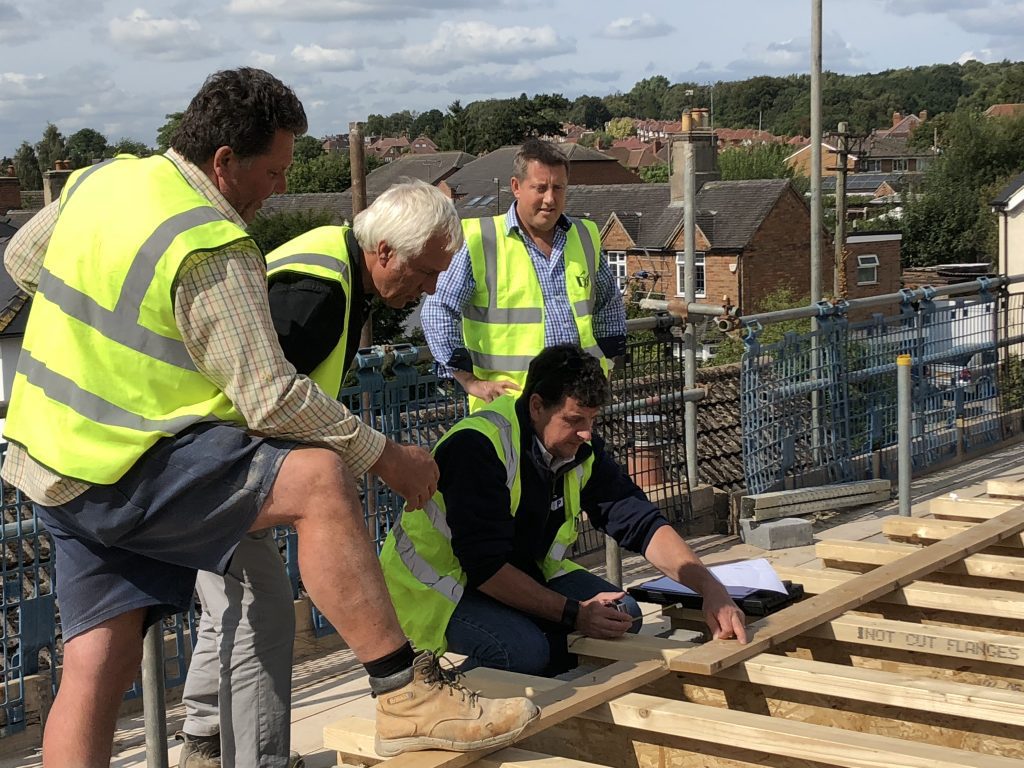
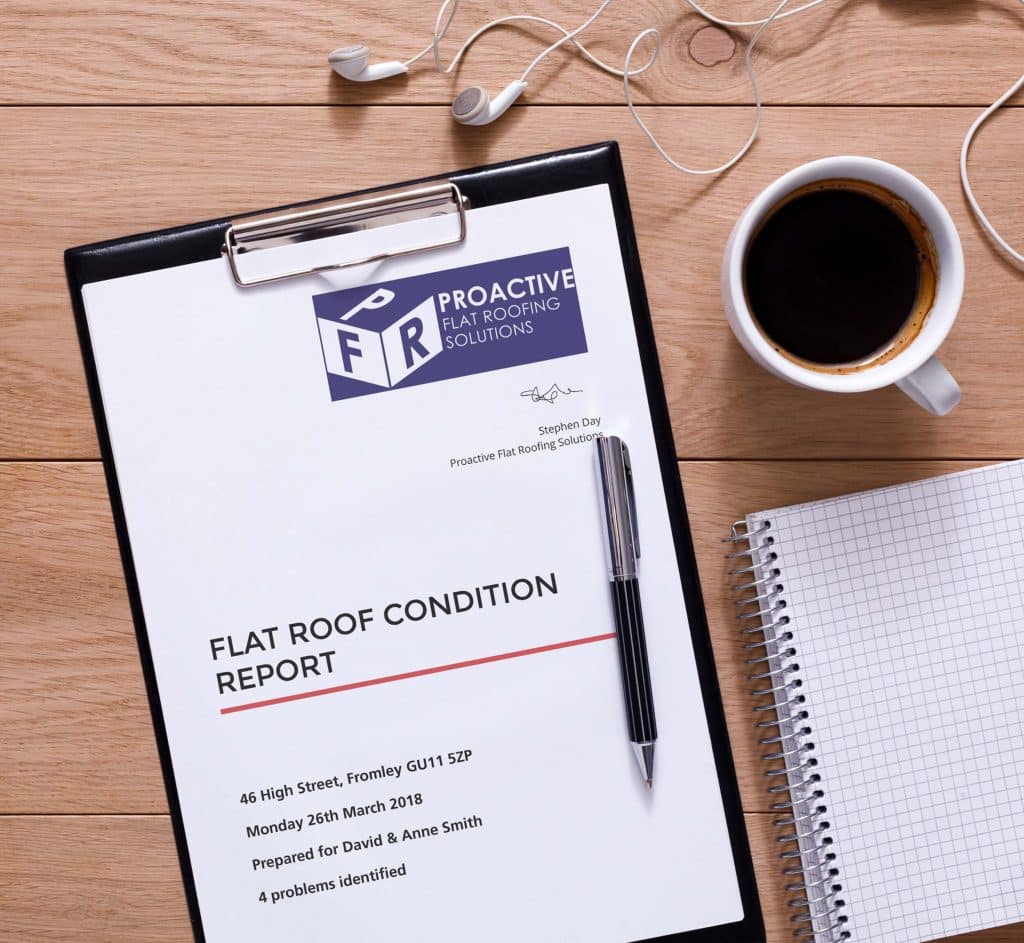
One of our trained flat roofing surveyors will take a look at the roof, inside and out, first. They’ll check the structural deck, insulation and waterproofing layer to find the cause of the problem – taking a video and photos of everything they find as well as an access video for any scaffolding requirements and waste management should work be required and agreed.
They will then discuss their findings with you and give you straightforward advice about your options and including your thoughts and requirements in the design of any potential work. They will then take away all the information, write up their roof survey and upload everything to your cloud based job folder.
What you won’t get, is any of our trained flat roof surveyors sitting in your home taking up your valuable time trying to pressure you into signing a contract.
At this point the Estimating team take over, write up your flat roofing condition report that sets out your options clearly, in plain English as well as creating a proper detailed and itemised Flat Roof Action Plan and Quote, we have the most transparent pricing model in the industry, so you will have NO surprises!
Typically the entire process from start to finish takes about 6 hours to produce (more on bigger projects) as well as vehicle running costs, fuel and overheads and that’s just for the average sized roof! £295 + Vat (£354) works out at just £59 per hour and we are not even going to charge you that! IT’S TOTALLY FREE.





Discover the truth about waterproofing, insulation, fitting... and the hidden problem with guarantees. Your pack includes;

"*" indicates required fields